
Can pneumatic actuators be used for precision flow regulation?
2026-08-24 Блог
Can Pneumatic Actuators Deliver Precision Flow Regulation?
For many industrial teams, the short answer remains yes, but important conditions apply. Pneumatic actuators serve as reliable workhorses across process industries worldwide. They convert compressed air energy into linear or rotary motion for valve operation. When paired with modern positioners and control systems, they achieve surprisingly accurate flow modulation. This article examines their real-world capabilities, practical limits, and optimal use cases.
Core Operating Principles for Flow Control
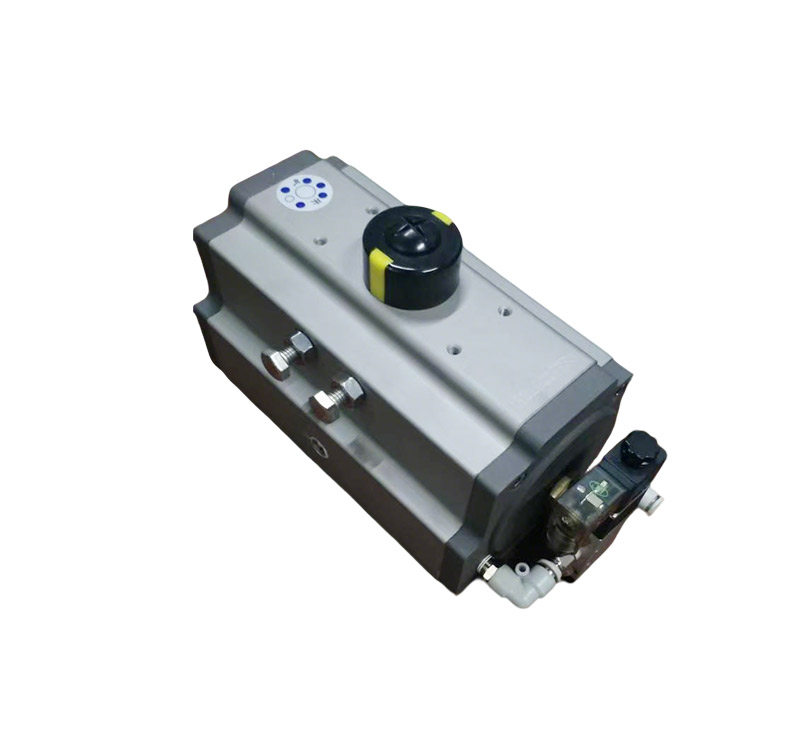
First, it helps to understand how these devices manage fluid passage. Pneumatic actuators push or turn valve stems based on incoming air pressure. Higher supply pressure moves the valve further toward its open position. Lower pressure allows springs or opposing chambers to close the mechanism. In basic on-off service, this simple principle works well enough. For precision regulation, however, additional components become necessary. Positioners continuously compare actual valve position against the control signal. They then adjust air pressure until the two values match closely. This closed-loop feedback creates the foundation for accurate flow management.
Key Components That Improve Regulation Accuracy
Beyond standard actuators, several accessories directly boost precision performance. First, high-resolution electro-pneumatic positioners represent the most critical upgrade. Modern digital models deliver positioning accuracy within one percent of full travel. Second, smart valve controllers add self-calibration and diagnostic features. They also compensate for wear, friction, and supply pressure fluctuations over time. Third, volume boosters speed up response without sacrificing steady-state stability. Fourth, fail-safe springs ensure predictable behavior during air supply loss. Finally, feedback sensors provide real-time position data to distributed control systems. Together, these elements transform basic actuators into precision regulation tools.
Performance Capabilities in Industrial Settings
In practical terms, properly configured pneumatic systems handle most regulation tasks well. For typical process control loops, they achieve flow accuracy between one and three percent. This level meets the vast majority of chemical, petrochemical, and water treatment requirements. Response times usually fall within one to three seconds for standard valve sizes. Compared with electric alternatives, pneumatic actuators offer faster stroke speeds. They also handle higher torque demands at lower upfront cost. Moreover, they operate reliably in hazardous areas without complex explosion-proof enclosures. For modulating control of globe, butterfly, and ball valves, they remain a standard industry choice.
Notable Limitations and Trade-Offs
Despite their strengths, pneumatic actuators face certain inherent constraints. First, they require a continuous, clean, and dry compressed air supply. Poor air quality causes corrosion, sticking, and accelerated component wear. Second, very high precision applications sometimes exceed pneumatic capabilities. For fractions-of-a-percent accuracy, electric or hydraulic systems may perform better. Third, air consumption adds operational cost over the equipment lifecycle. Fourth, temperature extremes affect air density and spring performance. Fifth, hysteresis and dead band remain slightly higher than in electric servos. Engineers must weigh these factors against the application’s actual requirements.
Ideal Industries and Application Scenarios
Pneumatic precision control works exceptionally well across multiple industrial sectors. In oil and gas operations, it handles choke valves and separator level control reliably. In chemical processing, it regulates reagent feed rates and reactor pressure with consistency. Water treatment plants use them for chemical dosing and filter backwash control. Pulp and paper mills rely on them for stock preparation and steam header regulation. Similarly, steel mills apply them to cooling water and gas cleaning circuits. For general process automation where safety, speed, and cost matter most, pneumatic solutions excel. They also integrate seamlessly with existing plant air infrastructure.
Selection Guidelines for Procurement Teams
When specifying pneumatic actuators for regulation duty, several factors deserve attention. First, match actuator size properly to valve torque requirements under all conditions. Oversized units cause overshoot and unstable control behavior. Undersized units fail to seat valves fully or overcome process friction. Second, choose digital positioners with Hart or Foundation Fieldbus communication. Third, specify stainless steel or coated bodies for corrosive environments. Fourth, consider integrated solenoid valves for simplified installation. Fifth, verify that suppliers offer local service and spare parts availability. Finally, compare total cost of ownership rather than purchase price alone.
Final Assessment and Practical Recommendations
In conclusion, pneumatic actuators absolutely support precision flow regulation when configured correctly. They deliver reliable, cost-effective performance for most industrial process control needs. While they may not match the ultra-fine accuracy of specialized electric systems, they cover the mainstream market thoroughly. For procurement and engineering teams, the decision hinges on application specifics. Standard modulating control favors pneumatic solutions for their speed, safety, and simplicity. Only the most demanding micro-regulation tasks require alternative technologies. By selecting quality components and proper sizing, plant operators achieve years of dependable, accurate flow control.
Популярные товары
Свяжитесь с нами
Адрес: комната 203-1, 2-й этаж, корпус А, ул. Синьцинь, д. 9, район Синьву, г. Уси, провинция Цзянсу, КНР
Мобильный: 0086-188-5271-7918
Email:william@wxaccton.com
Веб-сайт: www.actuator-china.com